





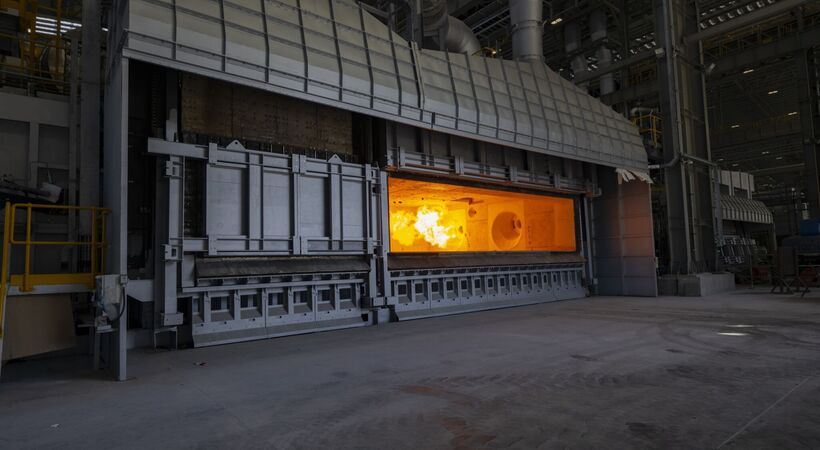
Emirates Global Aluminium (EGA) has charged its giant melting furnaces with scrap metal, marking a construction milestone.
The giant melting furnace is located at the company’s under-construction aluminium recycling plant in Al Taweelah, UAE.
The project is expected to be complete by the end of the first quarter of 2026.
EGA’s Al Taweelah recycling plant will have a production capacity of 185,000 tonnes per year, making it the UAE’s largest.
The new plant will process post-consumer aluminium scrap, and pre-consumer aluminium scrap, which will be blended with primary aluminium into low-carbon, high-quality billets and T Bars.
EGA also blends recycled metal with primary aluminium produced using solar power, marketed as CelestiAL-R, and with nuclear power, sold as MinimAL-R.
Al Taweelah recycling plant’s scrap sorting system can shred and segregate up to 150,000 tonnes of scrap per year, using magnetic, mechanical and x-ray segregation technology.
The facility is also equipped with a 90,000 tonnes per year melting furnace, which operates at around 750 degrees celsius. The melting furnace uses heat regeneration burners to further improve efficiency.
Liquid recycled metal is transferred to two 90 tonne capacity holding furnaces, which are used to blend recycled metal and primary aluminium from EGA’s smelter, and adjust metal chemistry.
Onsite, work continues to complete the casting and homogenisation stations to produce finished recycled aluminium products.
Abdulnasser Bin Kalban, CEO of EGA, said: “Aluminium’s infinite recyclability is a key reason our metal is an essential material for the development of a more sustainable society.
“We are now reaching the final stages of construction on this important project, which will turn aluminium scrap generated in the UAE and elsewhere into new high quality aluminium products that make modern life possible.”
Recycling aluminium requires 95% less energy than making primary aluminium, generating a fraction of the greenhouse gas emissions.
Global demand for recycled aluminium is expected to double by 2040.